


 The Theme for World Menopause Day 2025 is Lifestyle Medicine
 Download Menopause marks a significant physiological transition with far-reaching implications for women’s long-term health and wellbeing. While not a disease, the menopausal transition can be accompanied by symptoms and health risks that warrant personalised, holistic approaches to care.
World Menopause Day is held every year on 18 October.
The International Menopause Society (IMS), a global non-profit founded in 1978, created World Menopause Day in 2009 to raise awareness of menopause and improve the experience of women everywhere.
As the founder, IMS sets the annual theme, commissions and publishes the White Paper, and develops accessible resources to support women, healthcare professionals, and communities worldwide.
We celebrate the many medical advances and the increase in public awareness in recent years, but there’s still much more to be done.
Each year, World Menopause Day shines a spotlight on the challenges facing women during the menopause transition and highlights improvements in research, education, and support.
The Role of Lifestyle Medicine in Menopausal Health
Menopause marks a significant physiological transition with far-reaching implications for women’s long-term health and wellbeing. While not a disease, the menopausal transition can be accompanied by symptoms and health risks that warrant personalised, holistic approaches to care.
The 2025 IMS White Paper highlights a growing body of evidence supporting lifestyle medicine as a foundational, non-pharmacological strategy to improve menopausal symptoms, reduce chronic disease risk, and enhance quality of life.
The IMS White Paper, The role of lifestyle medicine in menopausal health: a review of non-pharmacologic interventions, is available in the IMS journal Climacteric with free online access for everyone to read:
https://doi.org/10.1080/13697137.2025.2548806
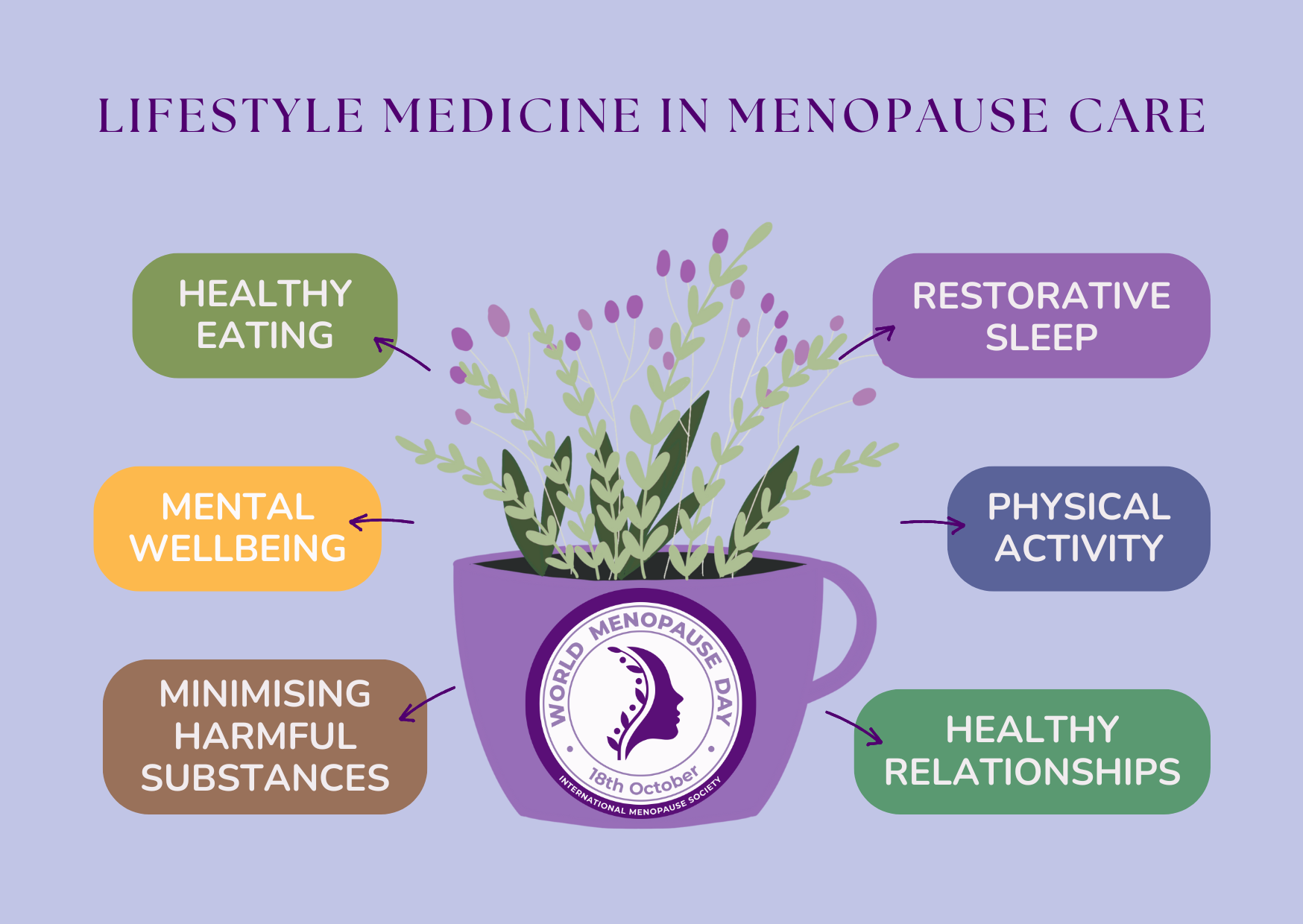
The White Paper concludes that women can be empowered to navigate menopause with resilience, autonomy, and vitality by embracing the six pillars of lifestyle medicine:
From the White Paper
Menopause, typically occurring between ages 45 and 55 years, is a natural life stage marked by hormonal changes that can affect the symptom burden, quality of life and chronic disease risk. While not a disease, the transition often requires individualized, holistic care. Lifestyle medicine – encompassing healthy eating, physical activity, mental well-being, avoidance of risky substances, restorative sleep and healthy relationships – offers a promising non-pharmacological strategy to optimize health during this period.
Additional resources and fact sheetsTo help share its insights, IMS has created six downloadable factsheets - one for each lifestyle area - offering clear, practical guidance on these key topics: Avoidance of Risky Substances Factsheet Healthy Relationships Factsheet This information is designed to promote health and wellbeing during and after menopause and to spark important conversations with healthcare professionals, families, and communities. Ways to share the factsheets:
|

The Australasian Menopause Society (AMS) is a professional community dedicated to supporting health professionals who care for women through midlife, menopause, and beyond. Together, we share knowledge, resources, and connections to advance evidence-based practice and improve women’s health.
[email protected]
+61 3 7076 1930
Australasian Menopause Society Limited
PO Box 4009
Hopetoun Gardens VIC 3162
Australia
ABN 69 867 357 105

