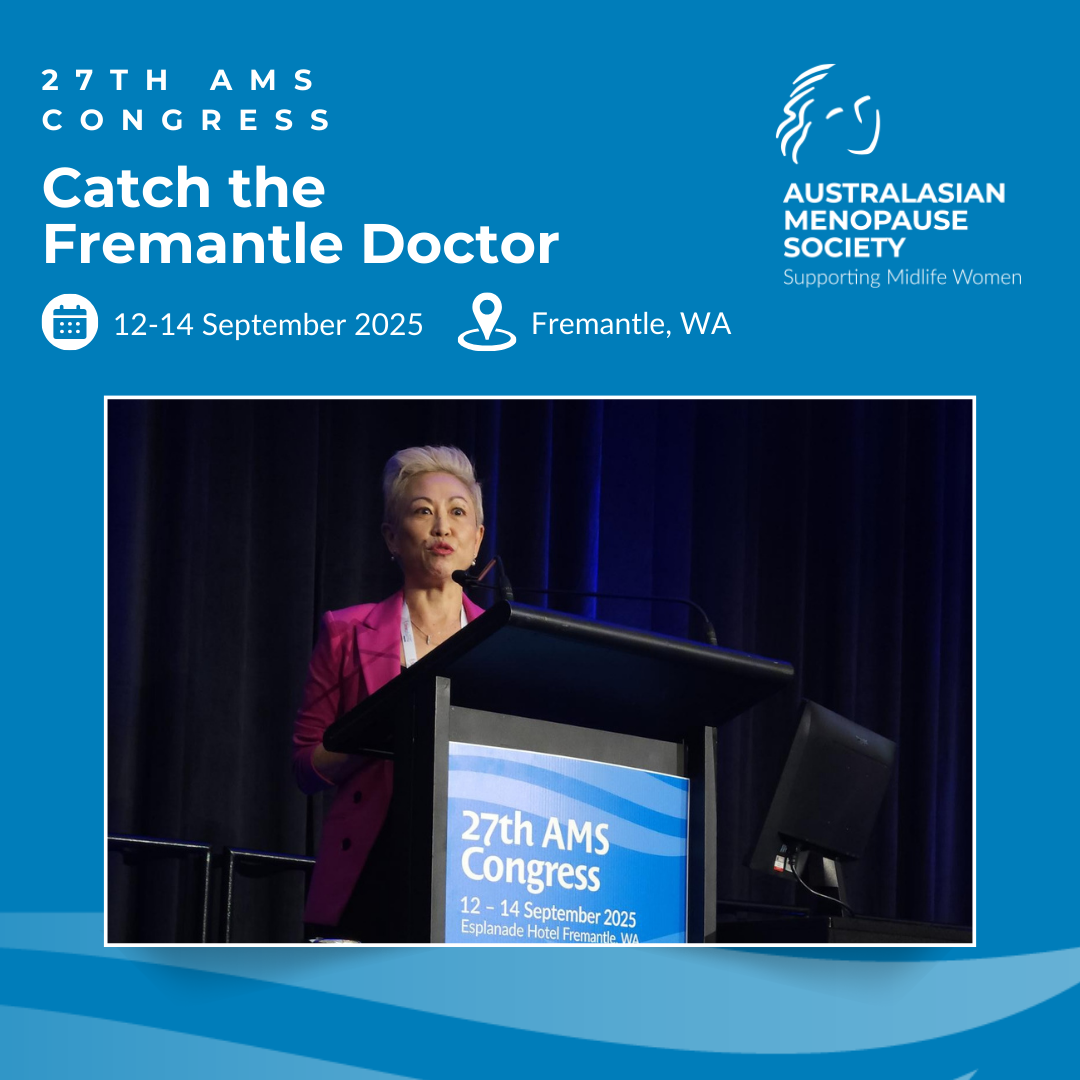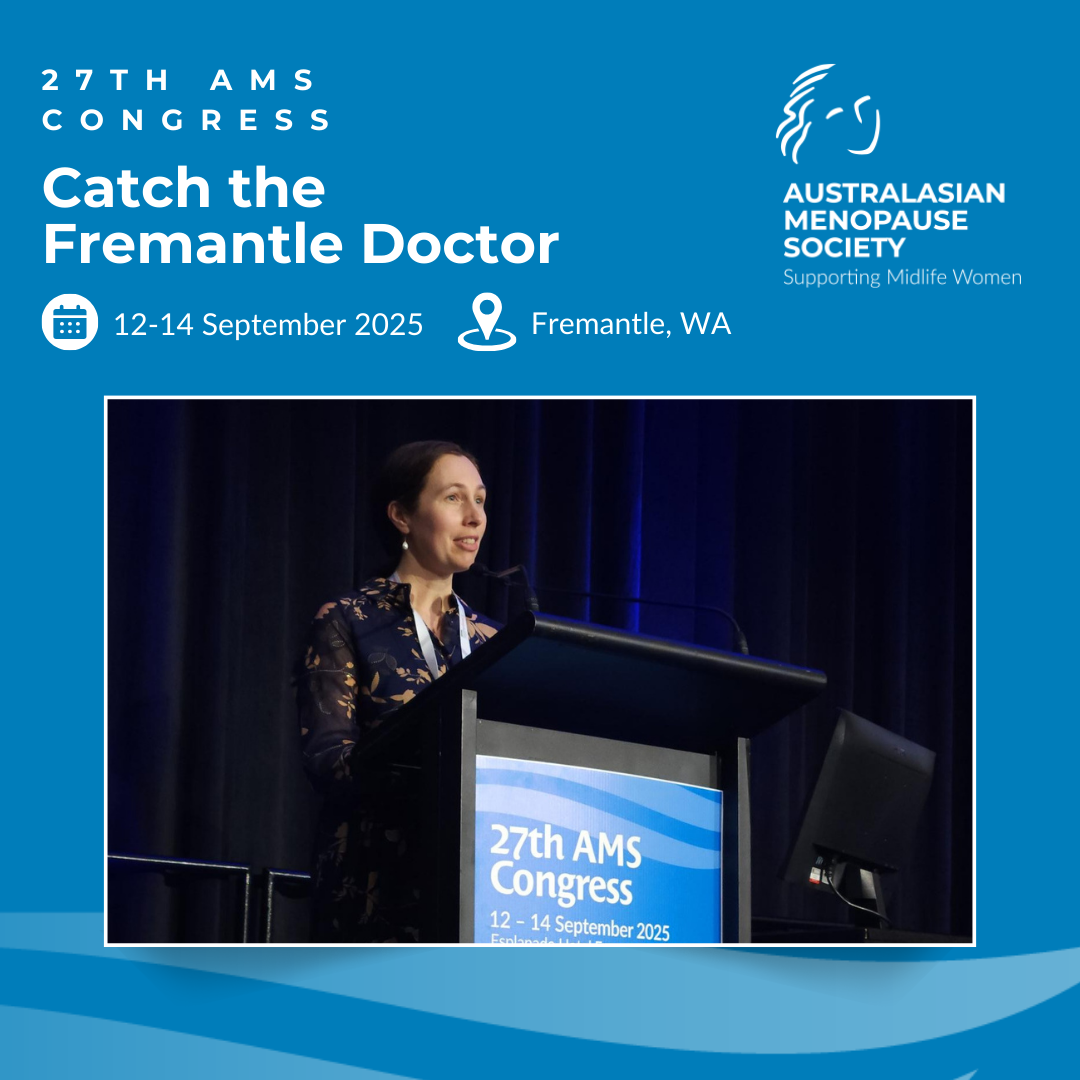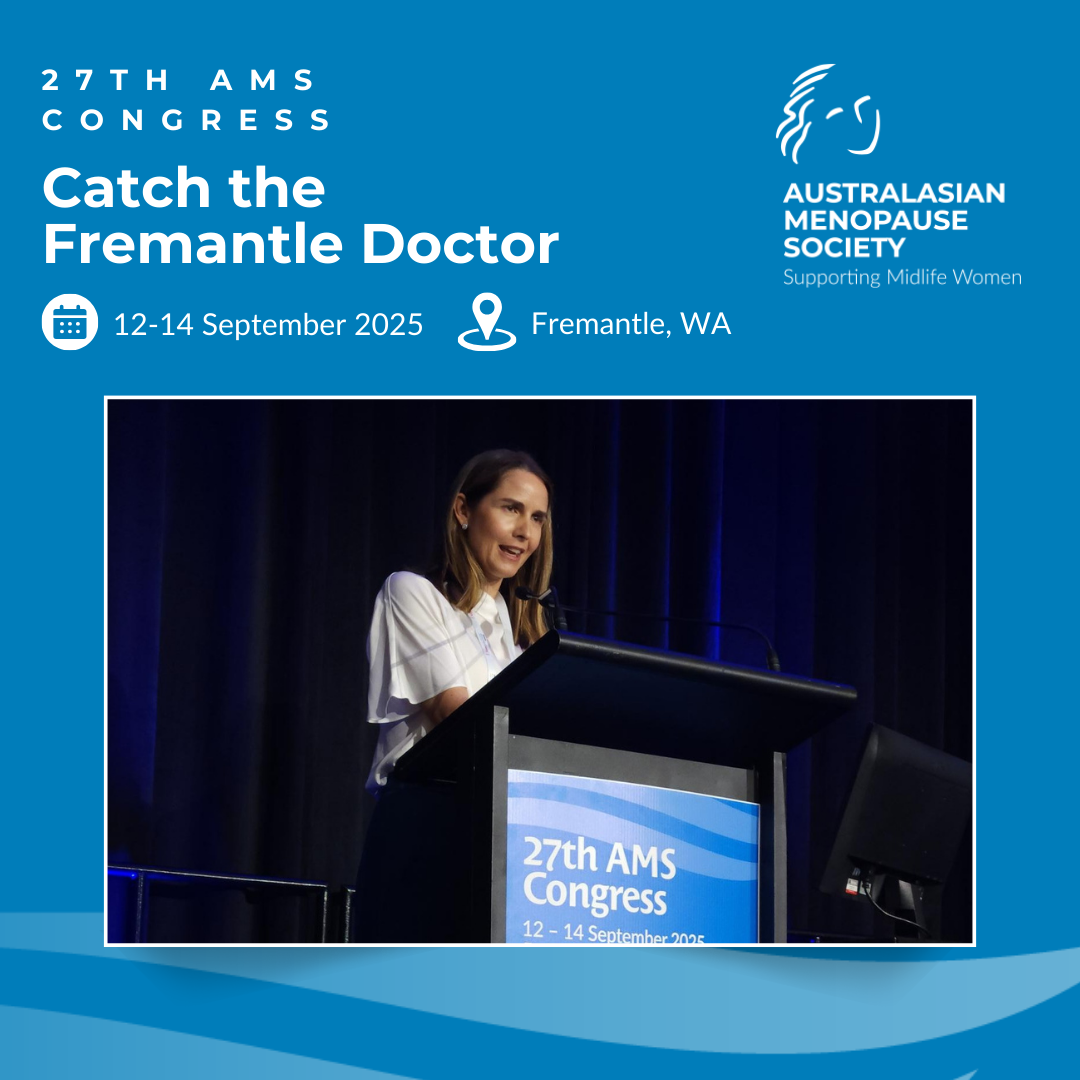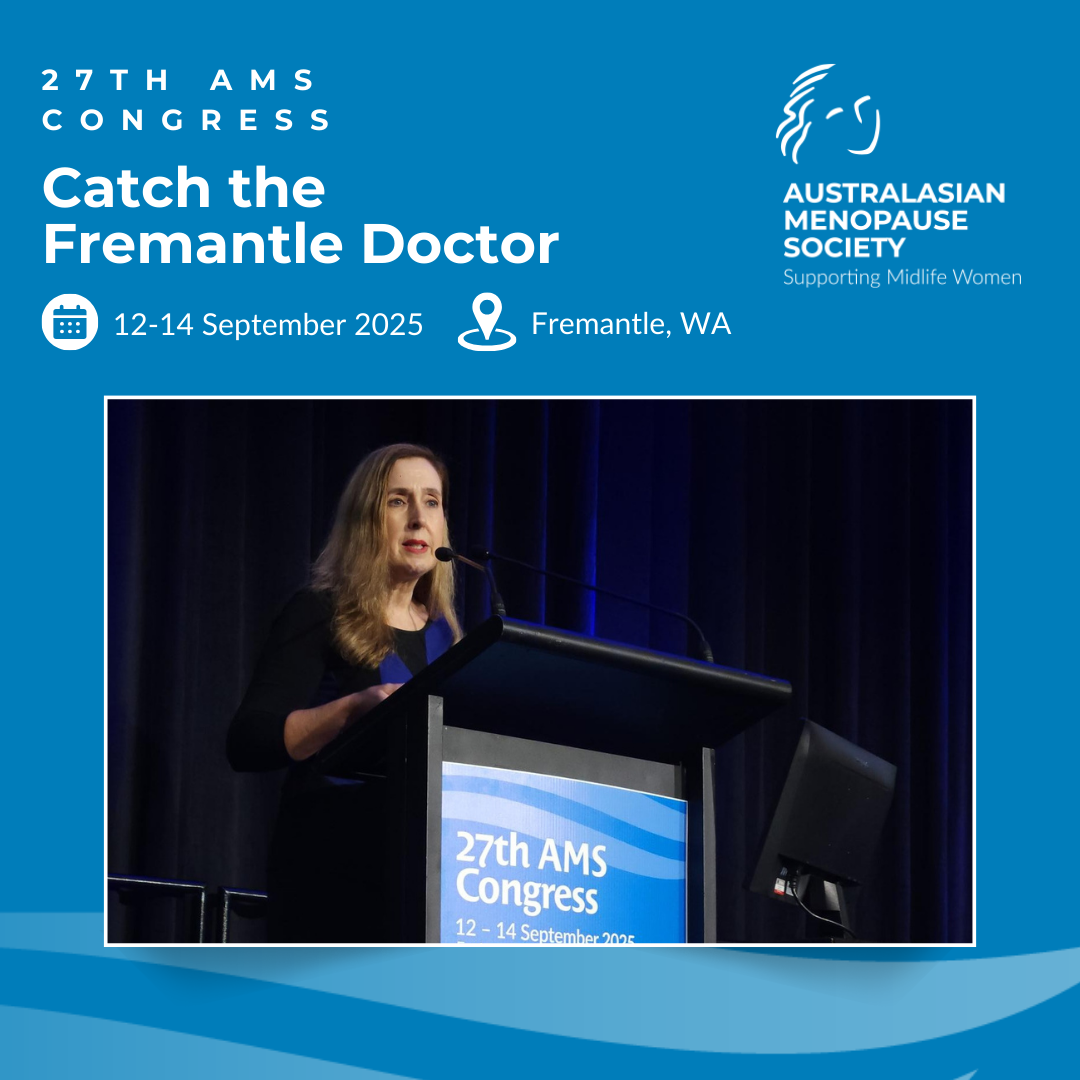
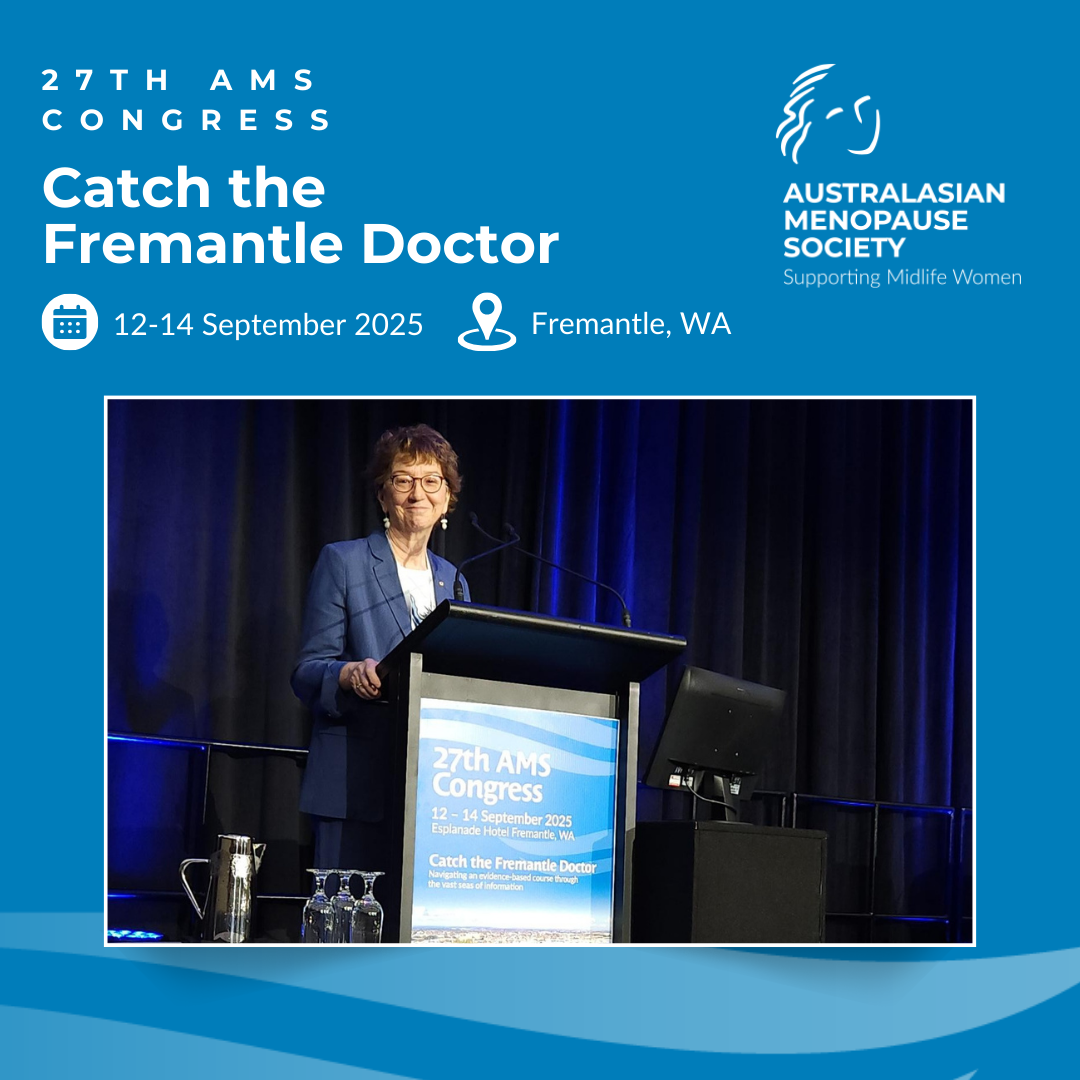
Jane shared a structure for approaching the menopause consult and reiterated the importance of long consults/repeat consults if needed, and that Menopause consults should be thought of as general midlife consults for women. |
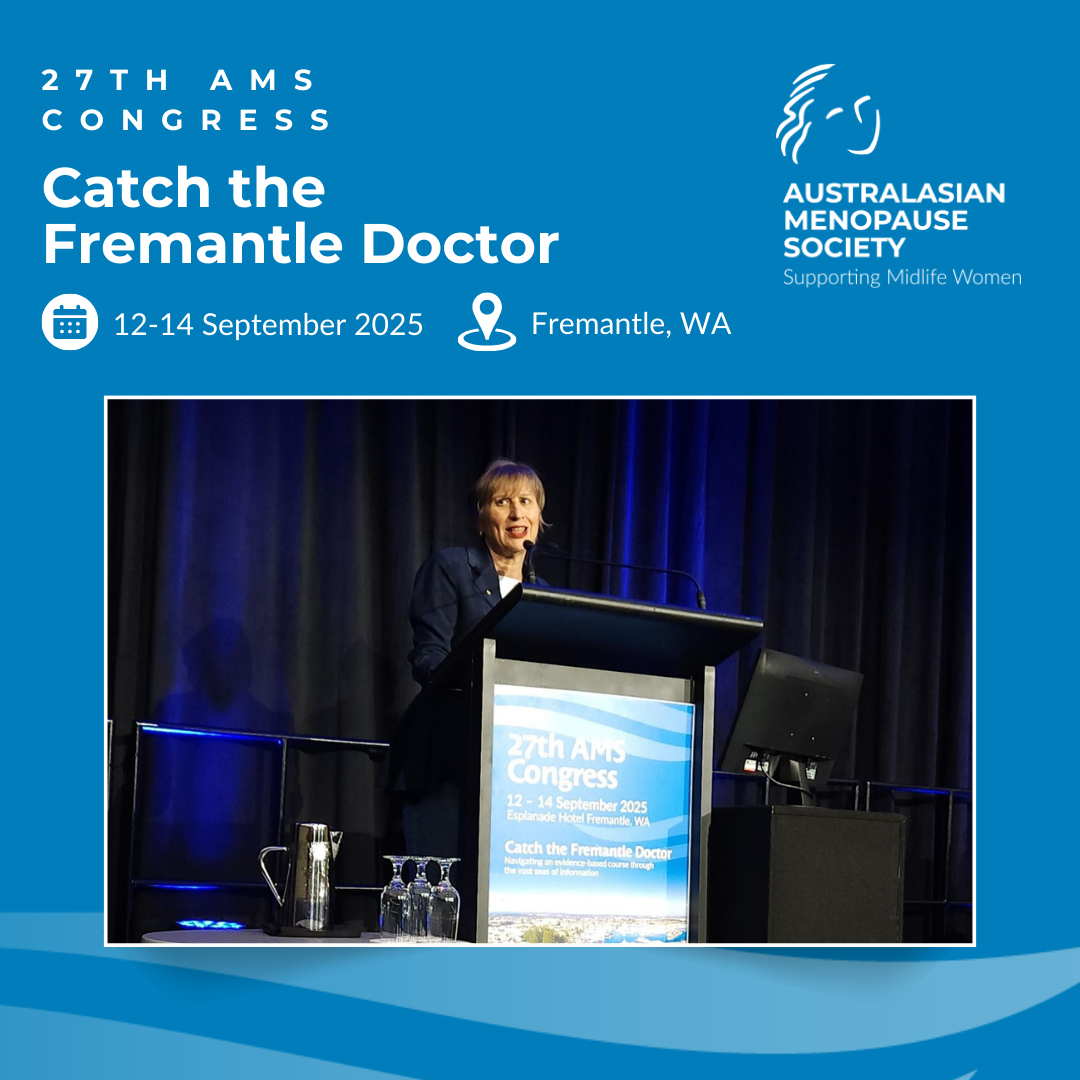
Susan updated Congress participants on the latest evidence base for MHT use, in this constantly changing landscape. It was a good reminder that "hormonal" blood tests have minimal use, and that prectitioners should treat the patient and not the numbers. |
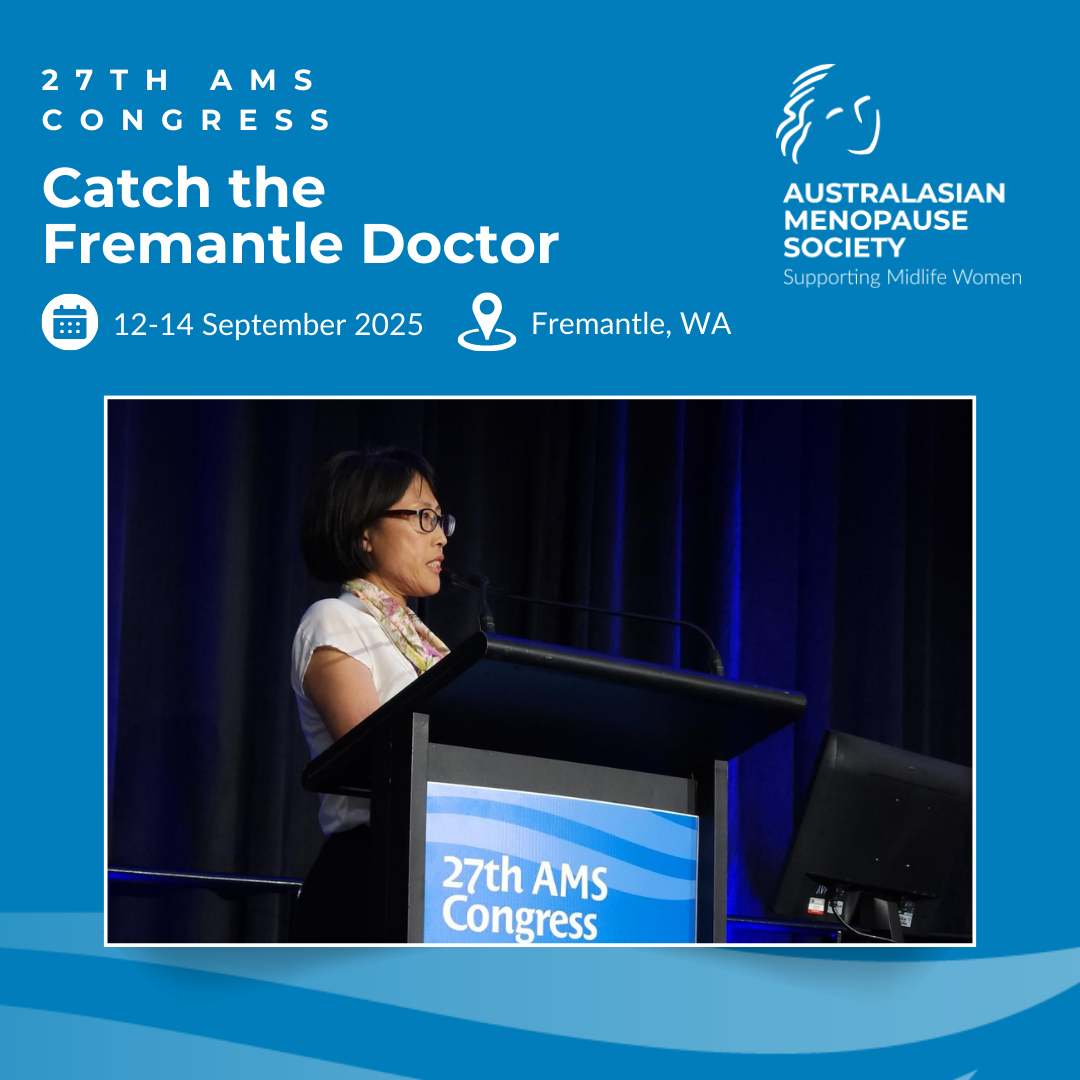
Christina provided an update on the current options available and the evidence (or lack thereof) for their use. |
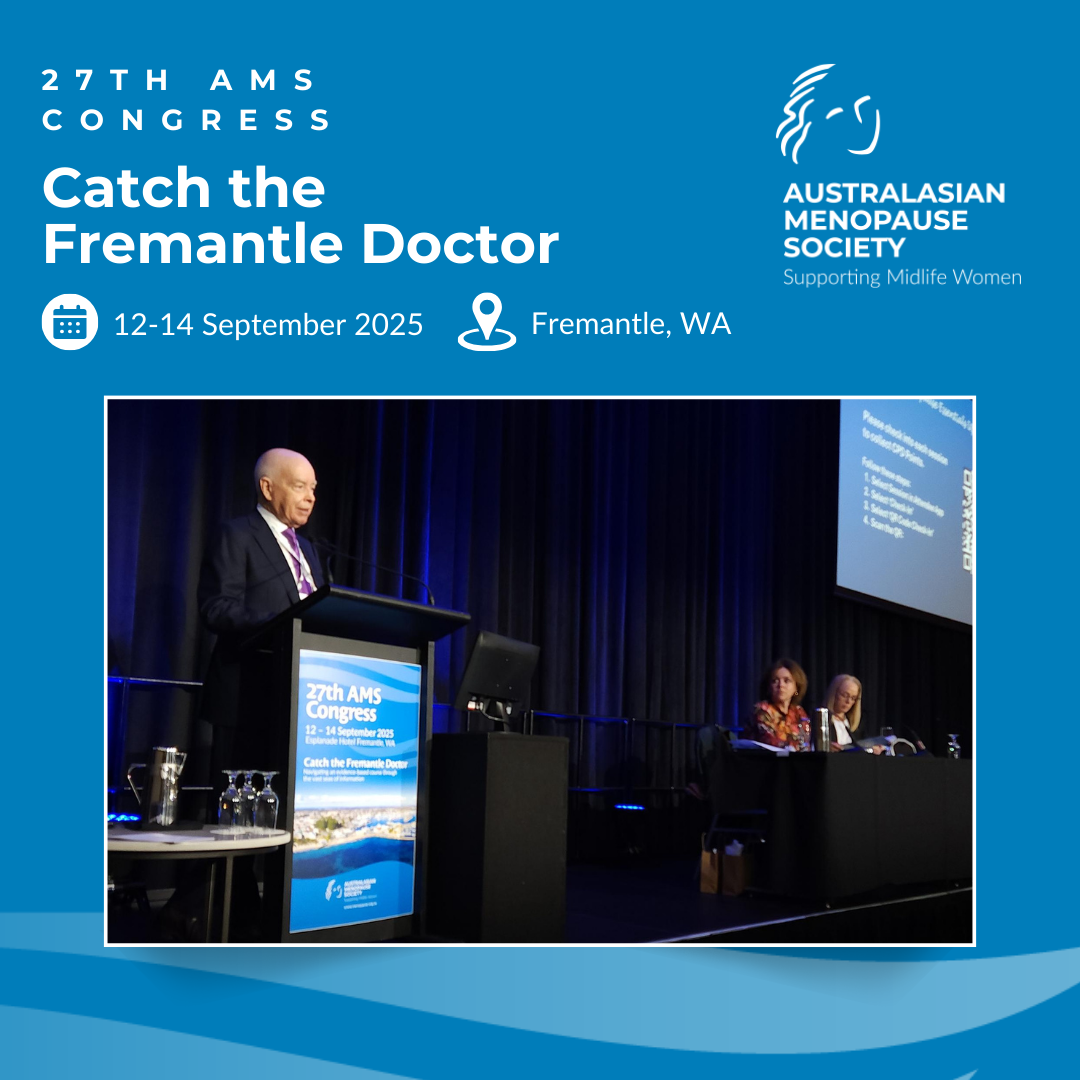
Rob took participants through some case studies on how to approach patients who might present as complex in terms of prescribing MHT, e.g. patients with migraine, cardiovascular disease, endometriosis. Rod also shared a fantastic explanation on interpreting risks of MHT use, and how to explain those risks to patients |
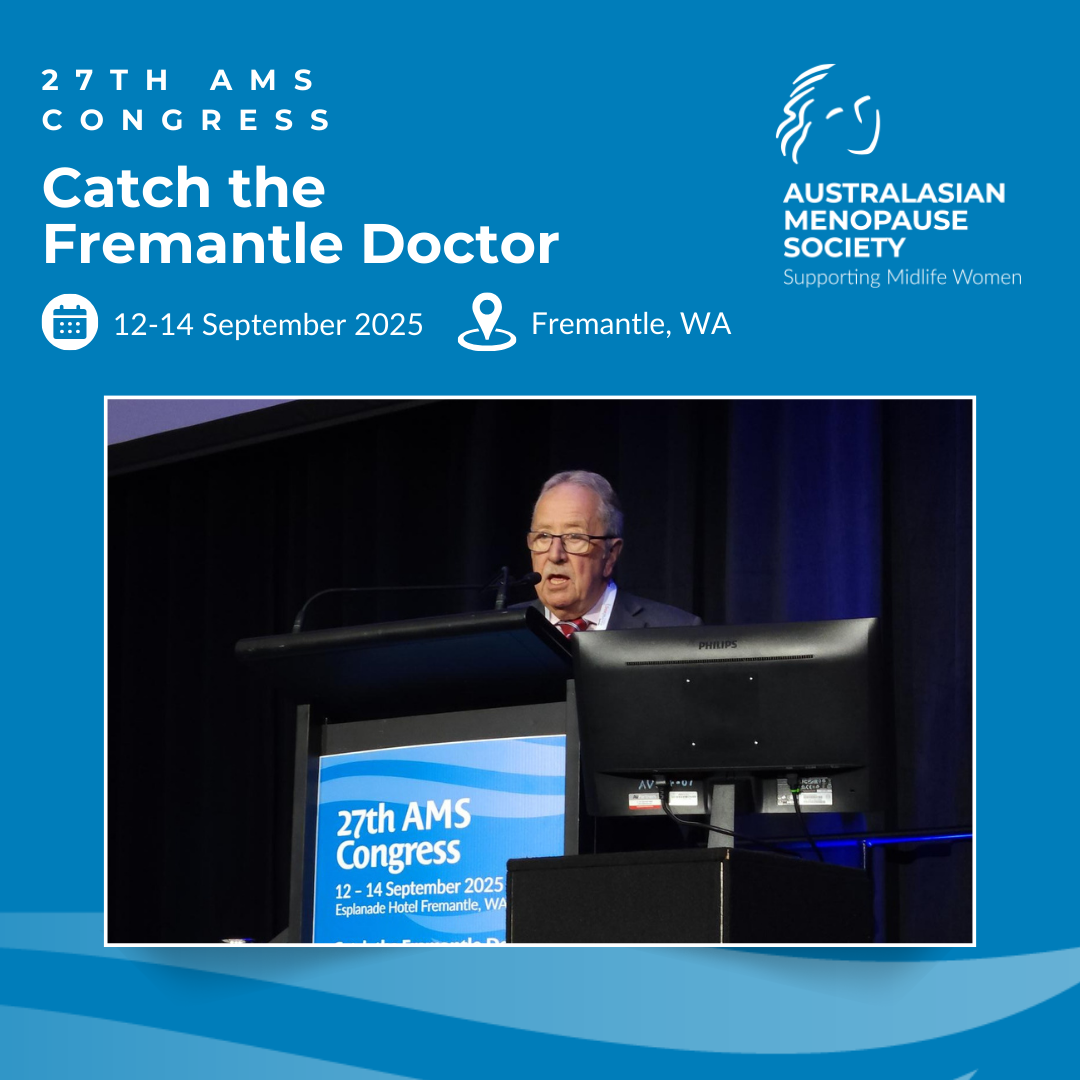
John went through risk factors for cardiovascular disease, how they are different for women vs men, how menopause can affect the cardiovascular system, and how MHT use at perimenopause and menopause is probably beneficial for prevention of cardiovascular disease - but more studies are needed to confirm this. |
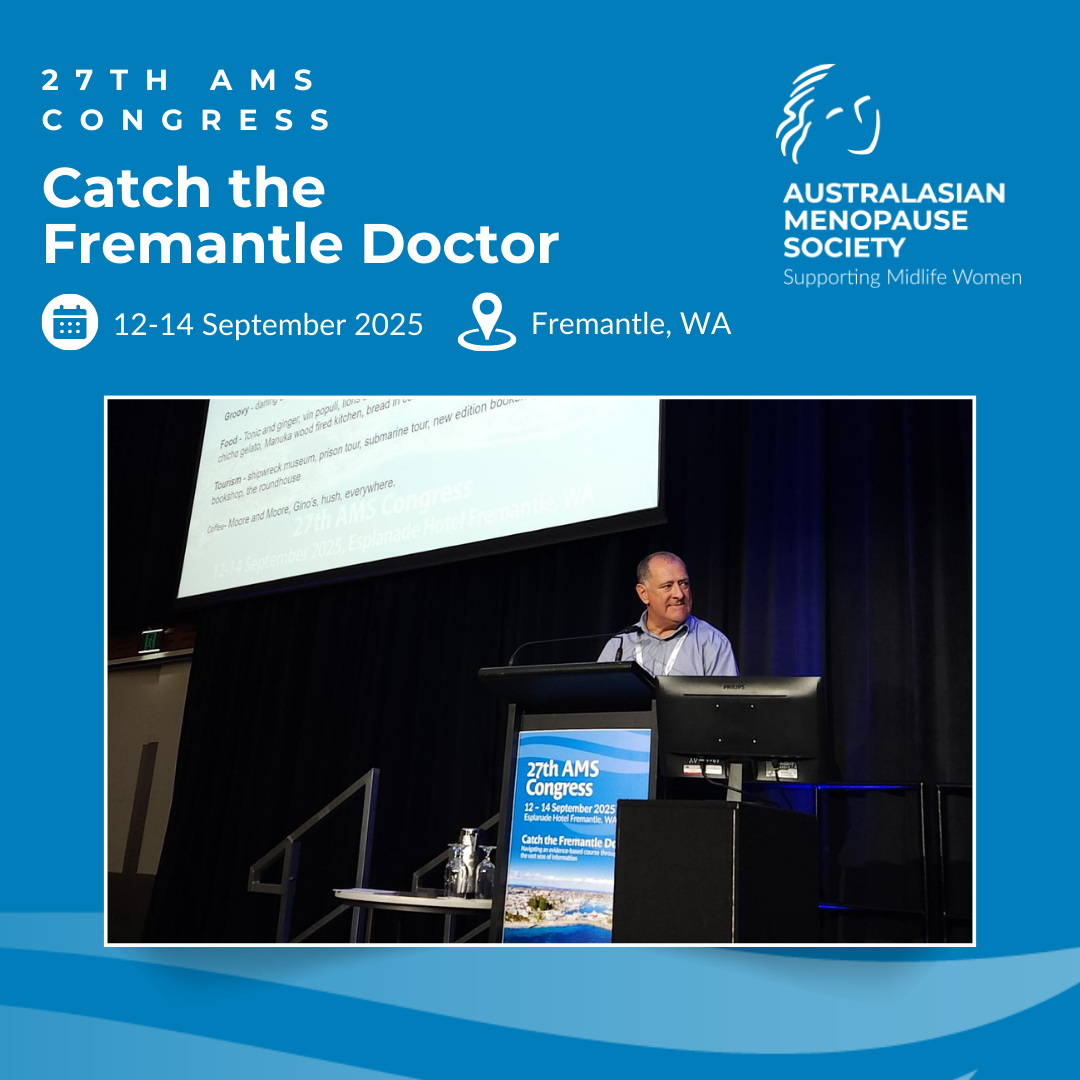
The presentation looked at research around the use of Incretins for weight loss in older people, and concerns that lean mass is also lost with fat mass. This translates to a loss of strength - all incretin therapies should be prescribed along with strength and resistance training to overcome this concern. |
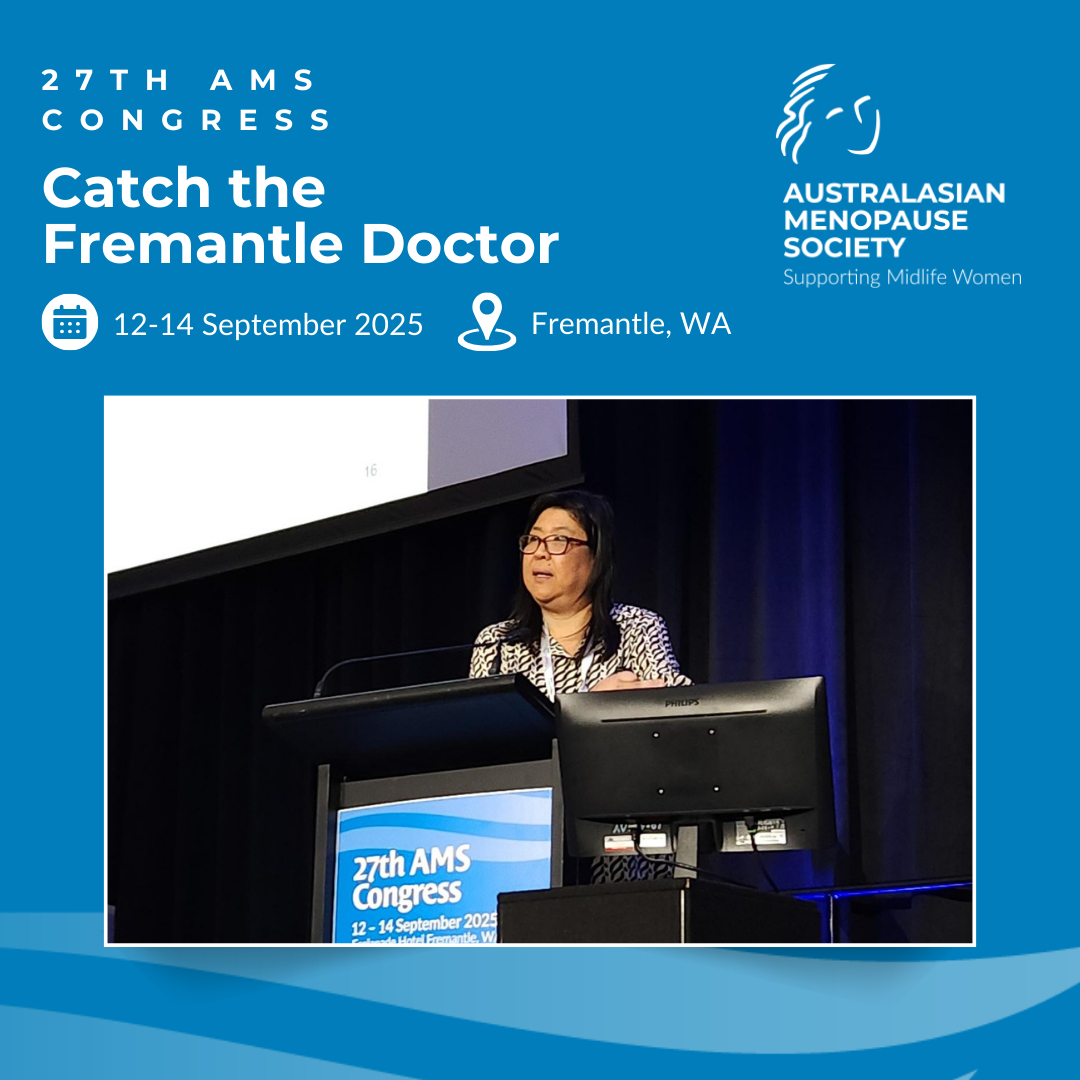
A fantastic and entertaining talk about which investigations are helpful, and which are not, in managing menopausal patients. |
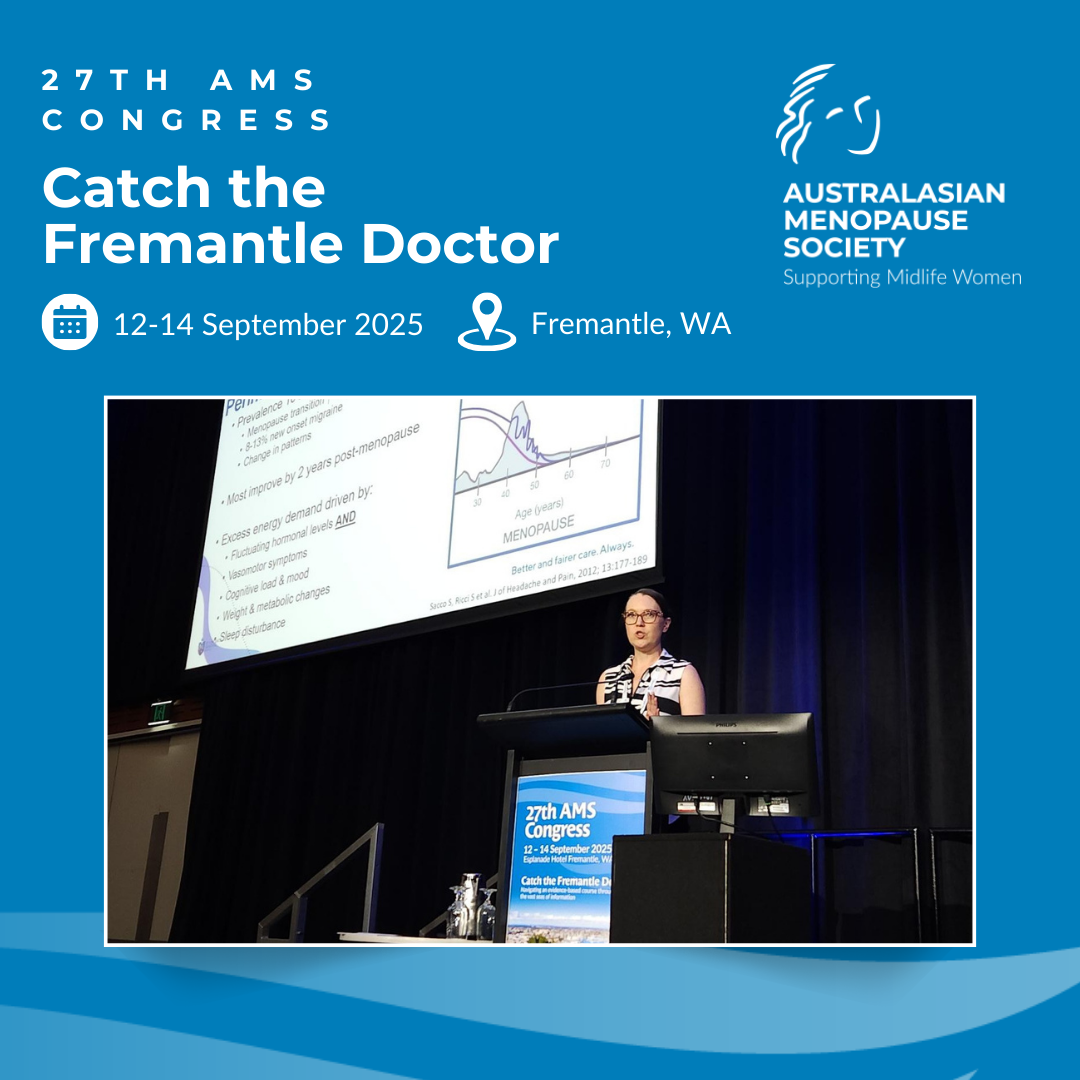
A look at how all headache disorders, and particularly migraine, occur more in women vs men, and that they all tend to worsen around menopause. Red flags were discussed, as well as usual headache/migraine management, and the potential role of MHT in treatment. |
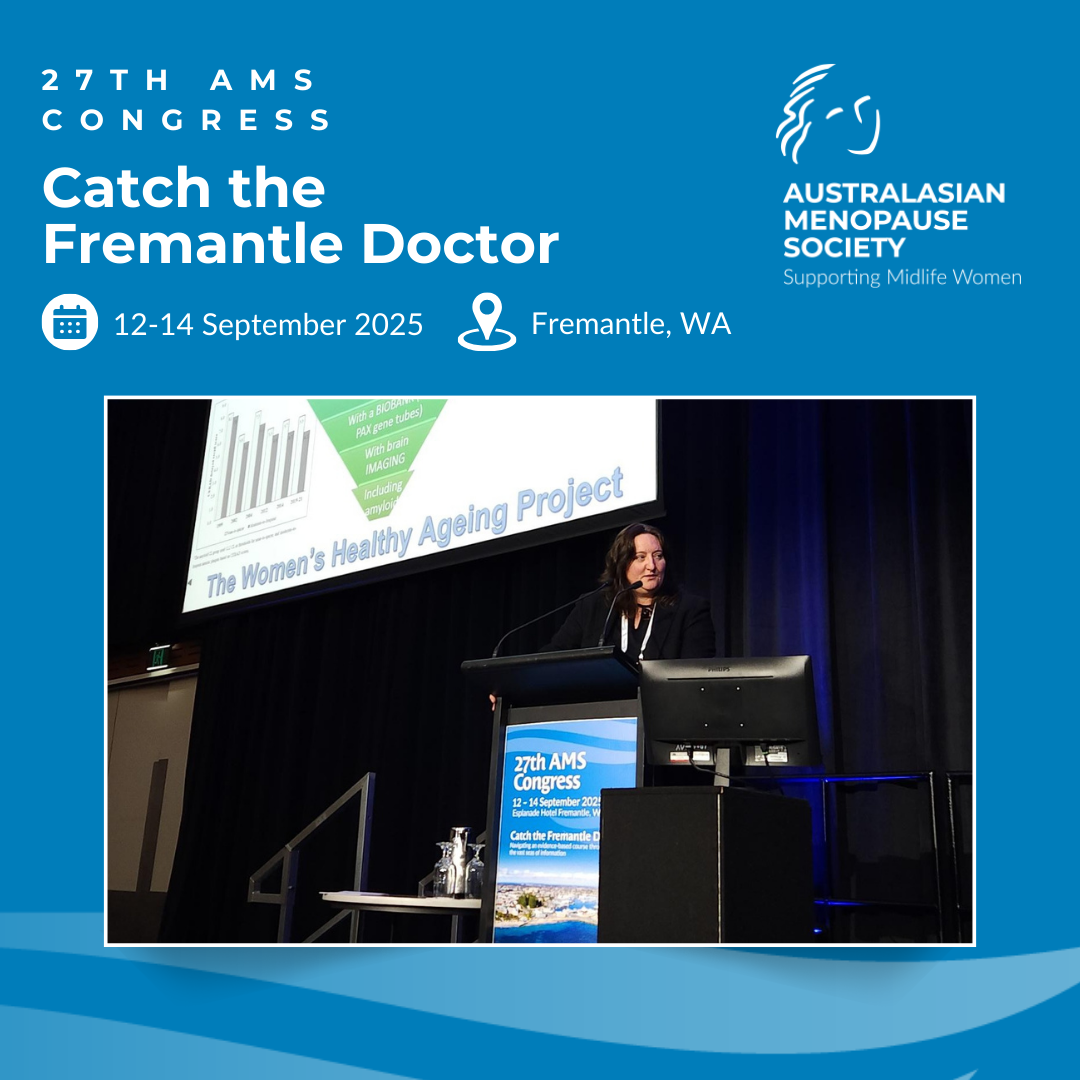
An overview of research into dementia in women, and how it differs from dementia in men. She reminded us that heart health is brain health, and that many risk factors for dementia are modifiable. |
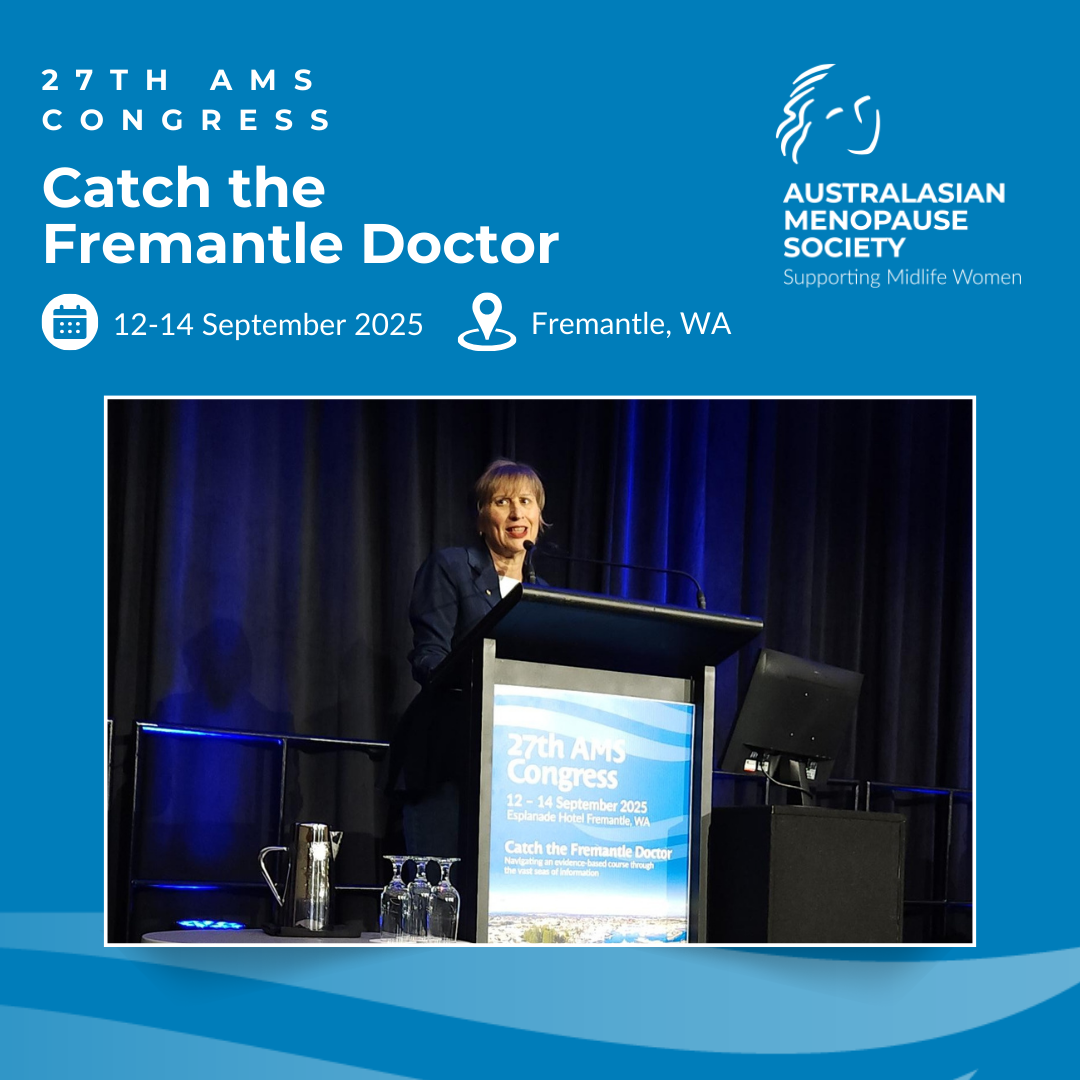
Susan talked through the currently available evidence for use of testosterone in women - currently this only supports its use for management of hypoactive sexual desire disorder in postmenopausal women. |
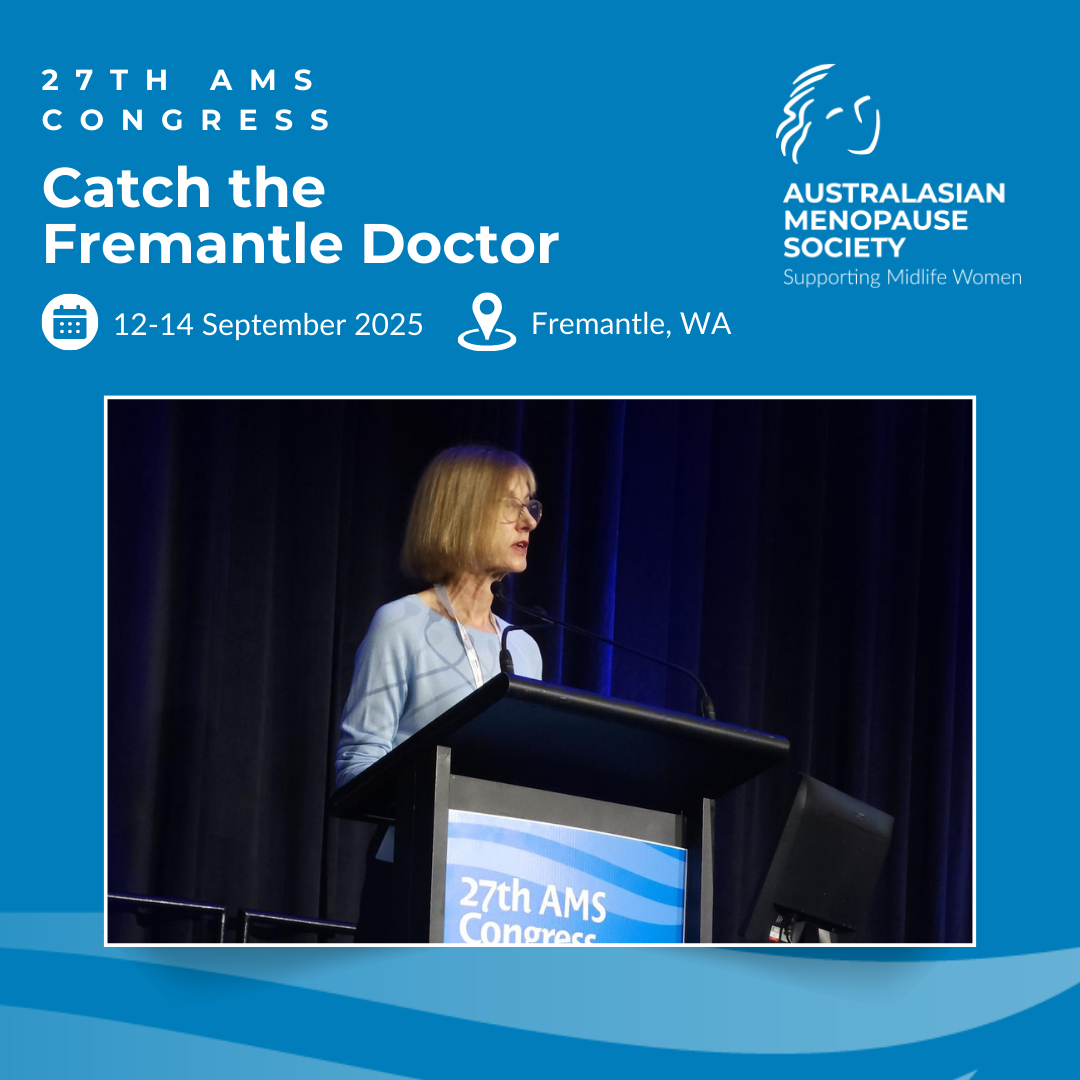
Prof Amanda Vincent provided a fantastic summary of the key points and changes in the recent update of the international guidelines on premature ovarian insufficiency. Links to the guidelines for both healthcare professionals and patients are available via the AMS website. |
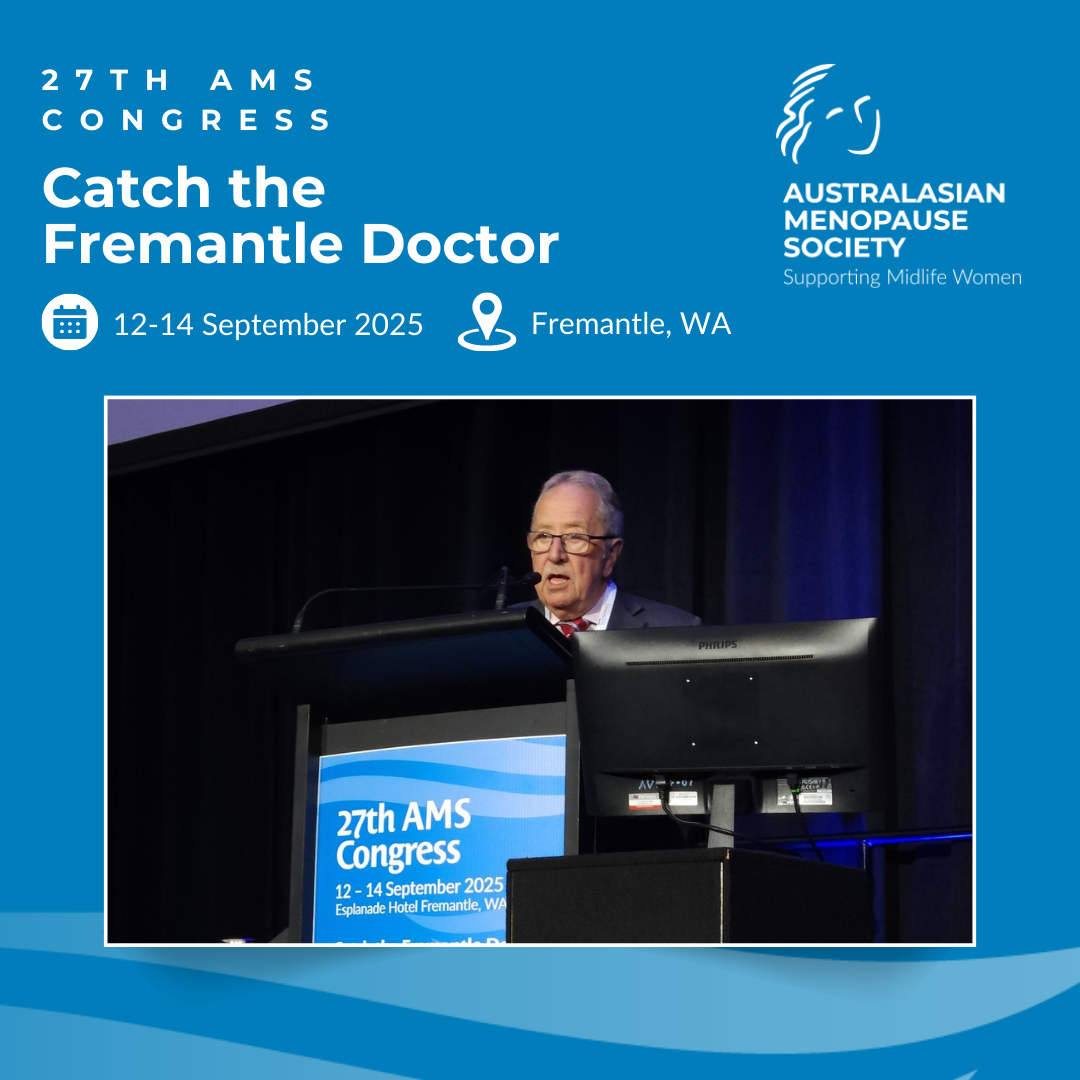
Prof Stevenson took participants through the currently available options for prevention and treatment of osteoporosis, and reminded us that MHT is an effective option for prevention in women who are able to use it. |
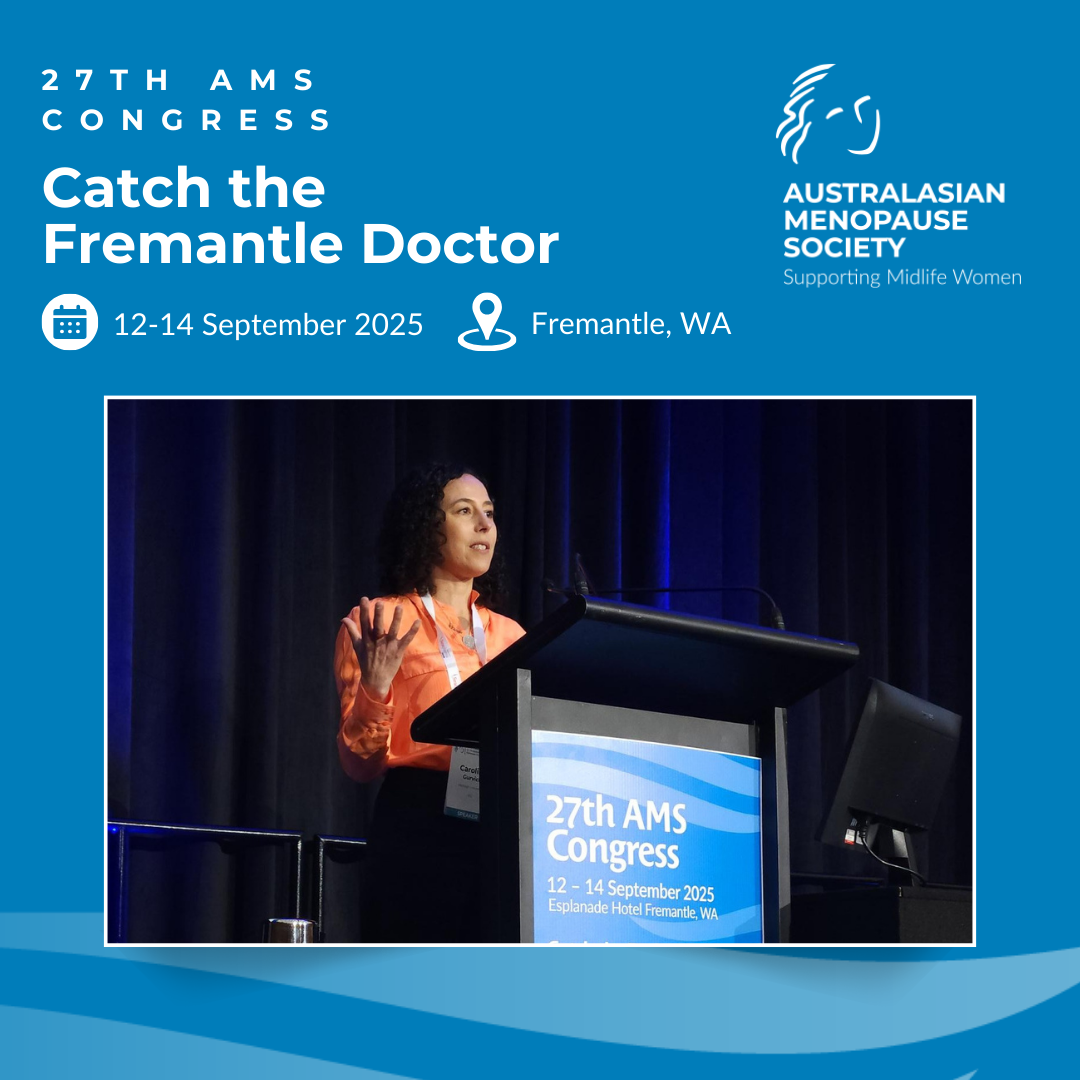
She discussed the intricacies of menopausal "brain fog", and its management, and reminded us of the importance of establishing good brain health habits as we age. |
|
|
|
|
|
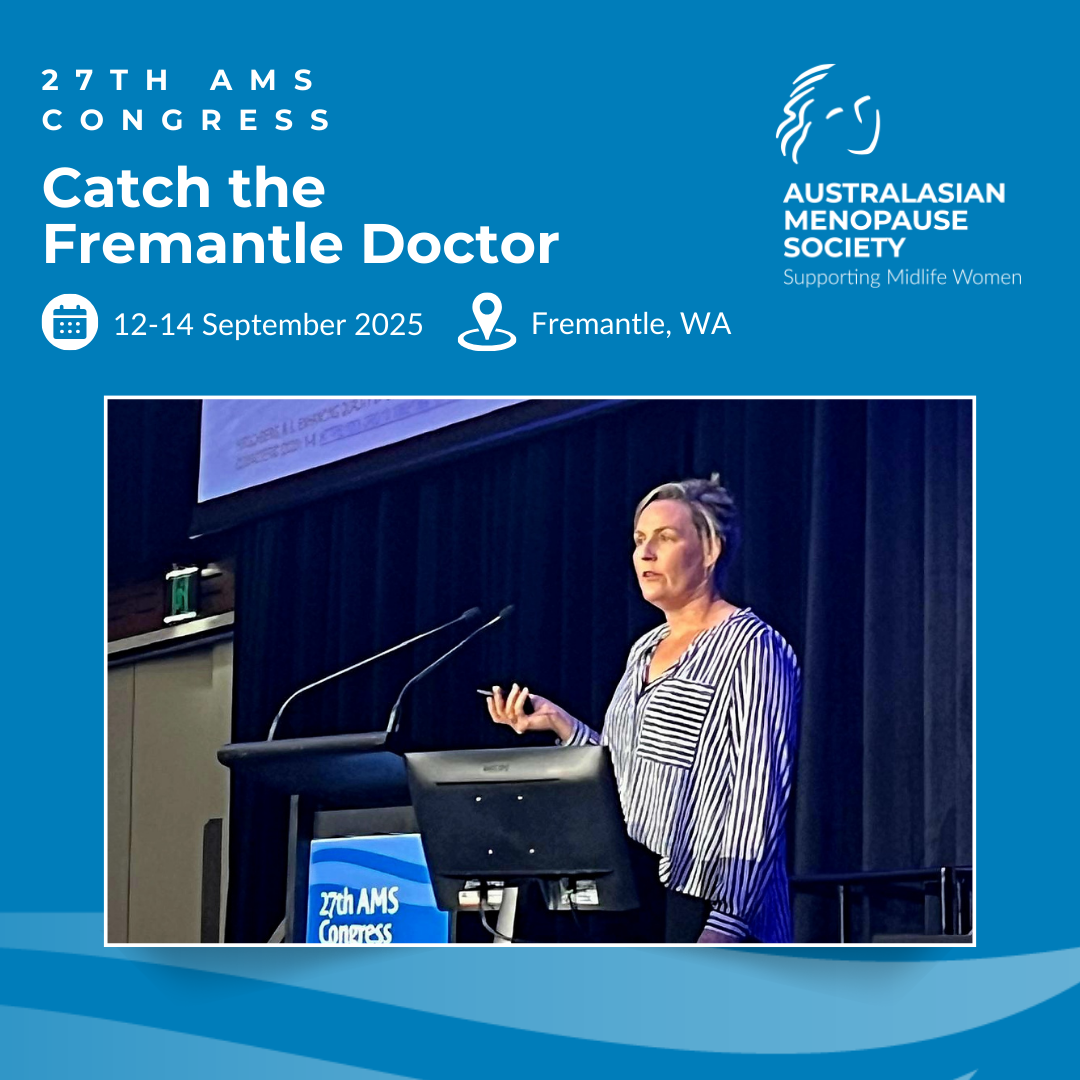
Katie spoke on recurrent UTI, over-active bladder and incontinence, and GSM. She went through assessment and management of these common midlife issues. |
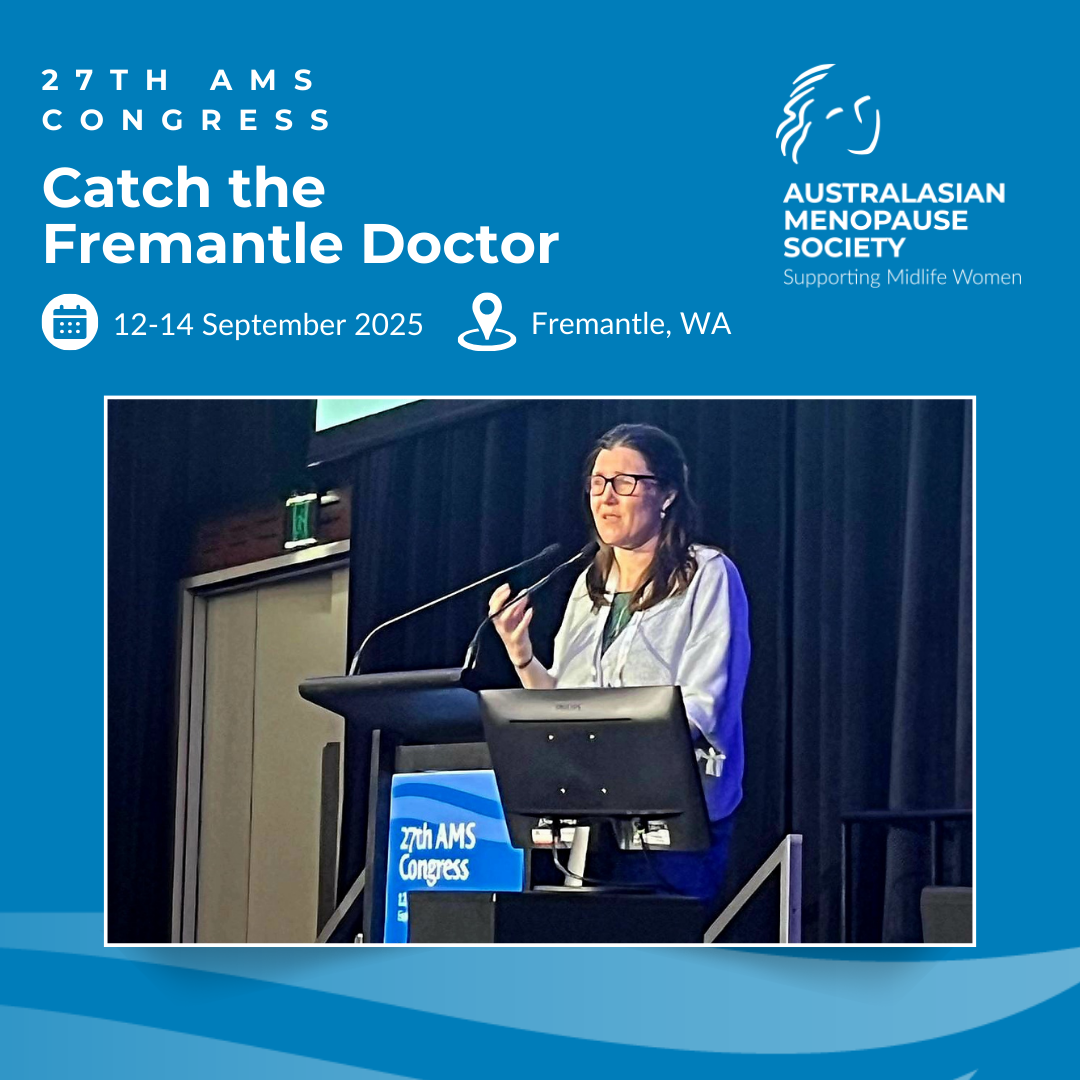
Focusing her dermatology lens on diagnosis and management of vulvovaginal skin conditions in midlife. |
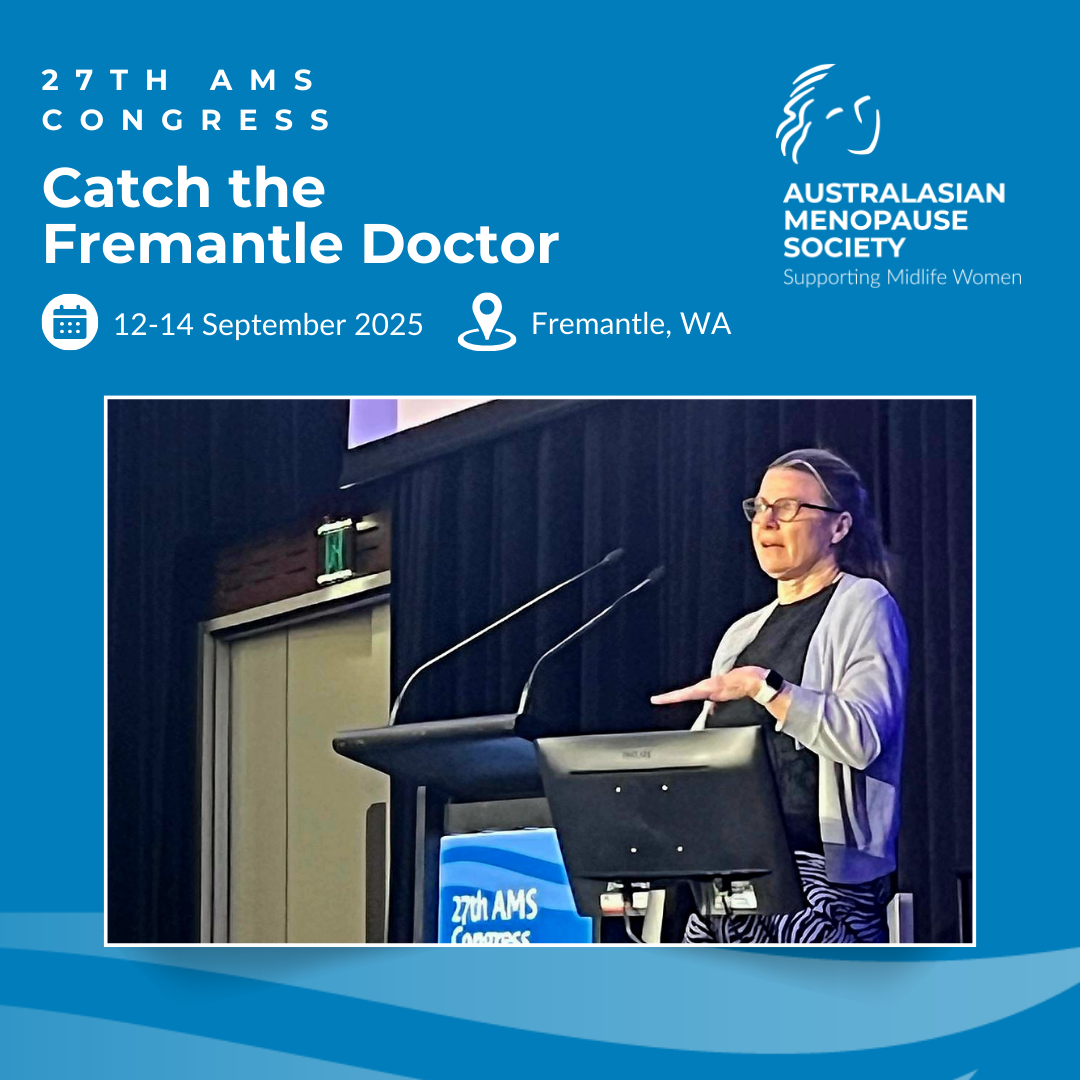
Lucy reminded attendees about the difficulties in managing symptoms that can be caused by oestrogen excess, oestrogen deficiency, or by the wild fluctuations in oestrogen around this time! |
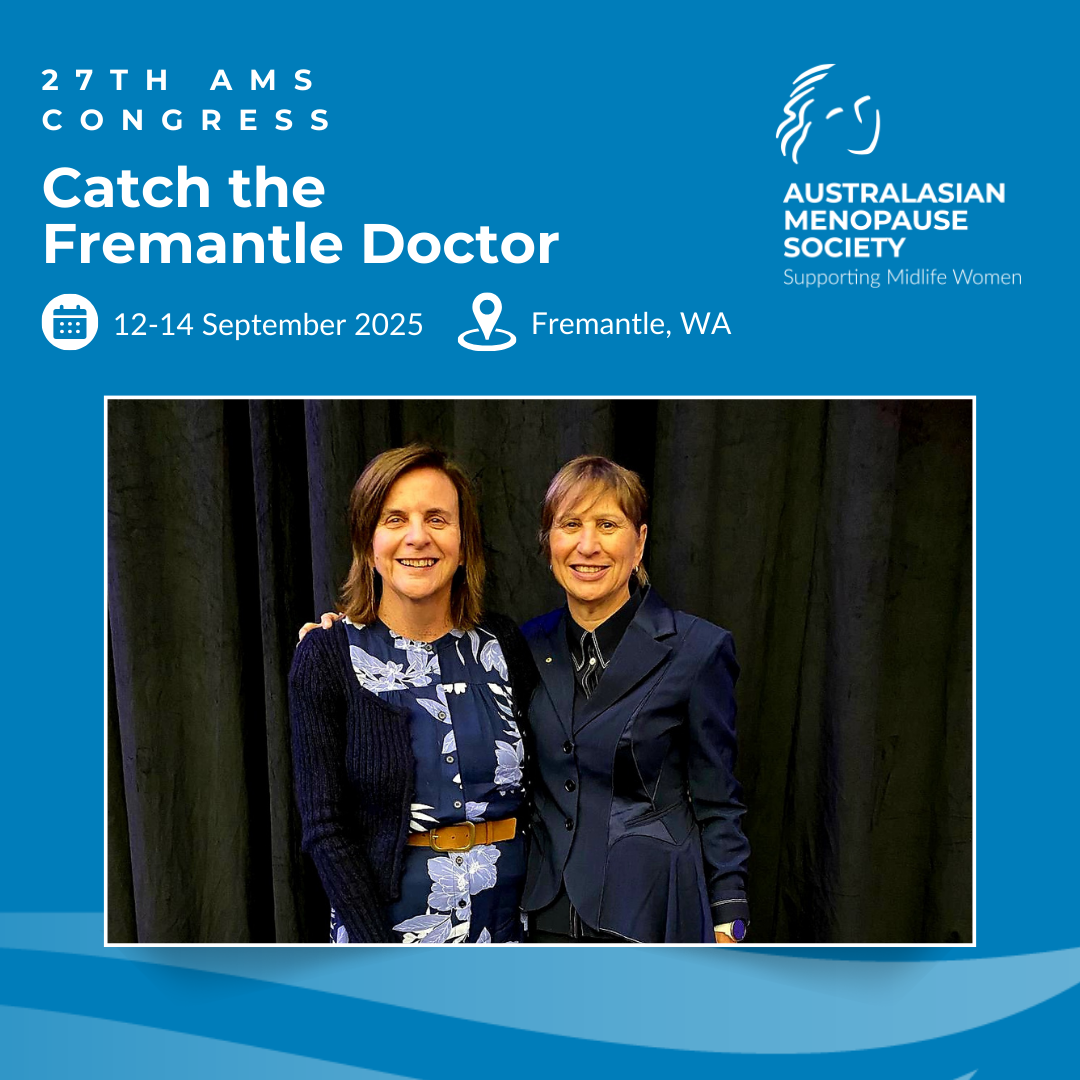
We were then treated to a debate by two Australian menopause giants - Professor Susan Davis (FOR) and Professor Bronwyn Stuckey (AGAINST) debating "Transdermal MHT should always be first line". Congratulations to Professor Stuckey on her victory! |
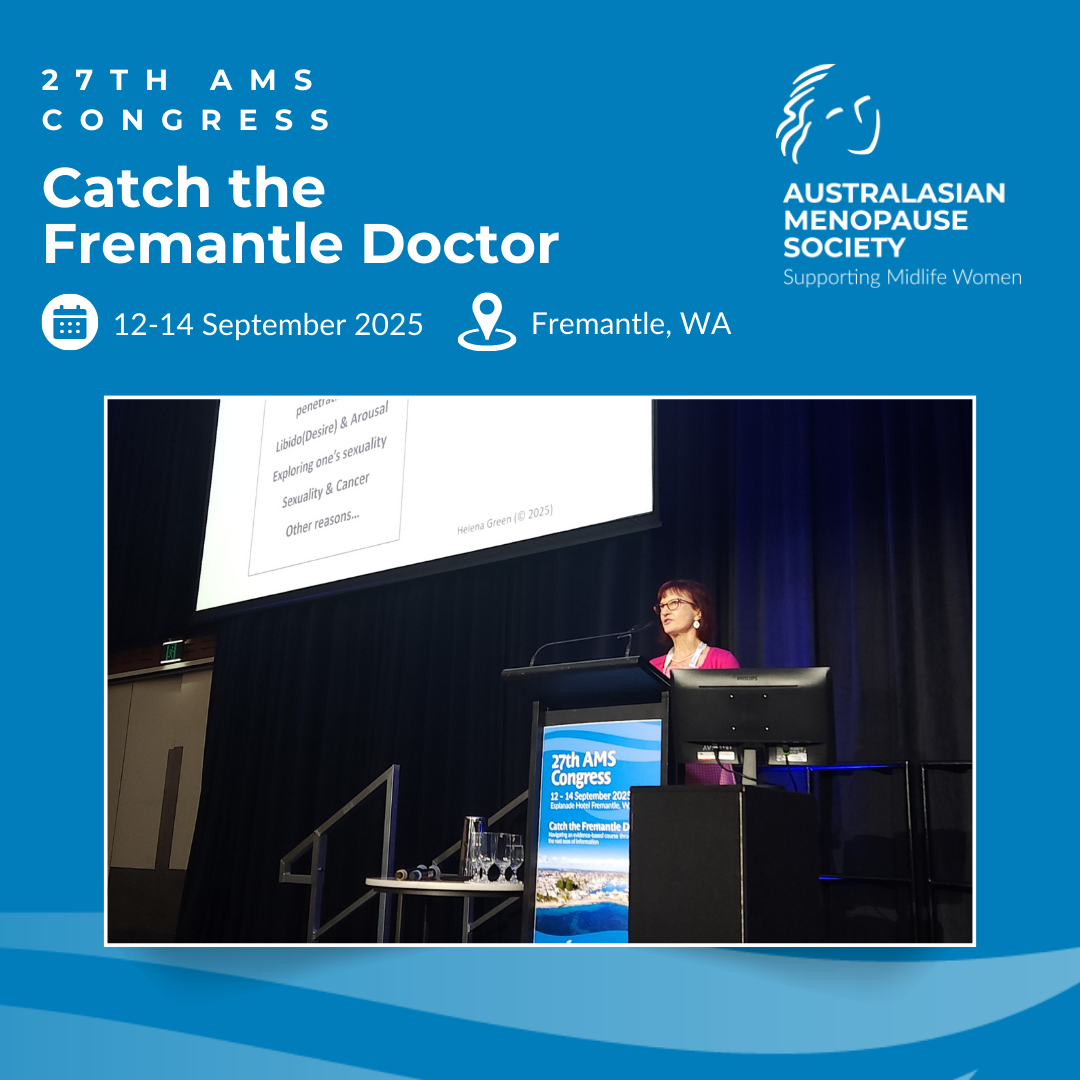
Helena Green, sexologist and psychosocial therapist, presented "Embracing change: understanding menopause, libido and sexual wellness", reminding us to enquire about sex if our patients don't volunteer the information, and giving us a PLISSIT model to help achieve this. |
Professor Gemma Sharp spoke on "The intersection of eating disorders at the menopause transition". She explored the prevalence and nature of eating disorders in midlife, and the lack of research and resources on how eating disorders should be approached at this time. (No Photo- she did a recorded session)
To wrap up the 2025 Congress, Dr Sonia Davison presented her famous "Sonia's Snippets" - an annual round-up of the latest menopause research, this year featuring the humble potato and its contribution to the development of Type 2 Diabetes.

The Australasian Menopause Society (AMS) is a professional community dedicated to supporting health professionals who care for women through midlife, menopause, and beyond. Together, we share knowledge, resources, and connections to advance evidence-based practice and improve women’s health.
[email protected]
+61 3 7076 1930
Australasian Menopause Society Limited
PO Box 4009
Hopetoun Gardens VIC 3162
Australia
ABN 69 867 357 105